



Covington sump pump installations give homeowners a practical way to move unwanted groundwater away before it becomes standing water, damaged materials, or a larger moisture problem. Trusted Plumbing and Heating brings more than 40 years of industry experience to plumbing work throughout Covington, King County, and the Greater Seattle area. We assess the property, plan the pump installation around how water actually reaches the home, and make sure the finished system has a clear path to move that water away.
 What a well-planned sump pump installation should give you
• A pump sized for the amount of water the system may need to move
• A sump basin placed where water can collect effectively
• A reliable float switch that activates the pump automatically
• A check valve that helps prevent discharged water from flowing back
• A discharge line planned to move water away from the foundation
• Full system testing before the installation is considered complete
What does a sump pump actually do?
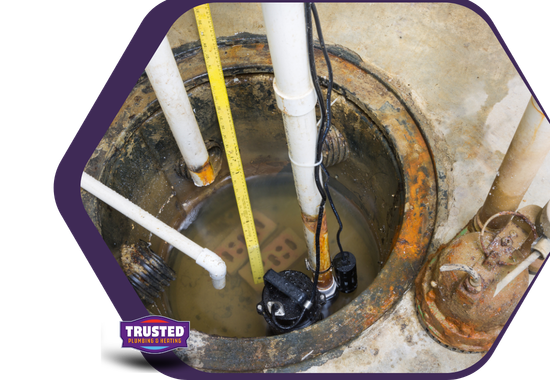
A sump pump collects water at a low point below the home and pumps it through a discharge line before it can spread through a basement or crawl space.
The pump sits in a sump basin, where groundwater or drainage water collects. When the water reaches a set level, the float switch activates the pump. The pump then sends the water through piping to an appropriate discharge point.
For Covington homes with recurring moisture, a sump system can become an important part of the overall drainage and plumbing setup rather than simply a temporary response after flooding has already occurred.
Where the discharged water goes matters
Pump installation is not only about placing equipment in a basin. The discharge route matters just as much.
Sending water too close to the foundation can allow it to return to the same area the system is trying to protect. Connecting drainage to the wrong sewer line can also create problems. King County provides information on how homeowners can manage rain and sump pump discharge on their property, including redirecting certain drainage away from the sewer system.
We look at the site, existing drains, discharge options, and surrounding conditions before determining how the water should leave the property.
When is replacement better than pump repair?
If a sump pump already exists, replacement may make more sense when the unit is unreliable, repeatedly needs pump repair, cannot keep up with incoming water, or has reached the point where another repair offers little long-term value.
A plumber should also check the rest of the system. Sometimes the pump is not the real problem. A blocked discharge line, damaged check valve, poor basin placement, or drainage issue can cause similar symptoms.
How Covington sump pump installations work
A professional installation starts with understanding the water problem rather than simply choosing a pump. The pump system, basin, piping, drainage route, and site conditions all have to work together.
1. We inspect the home and drainage conditions
The first step is identifying where water appears, where it naturally collects, and whether existing plumbing, drains, sewer lines, or foundation drainage may be involved.
We also consider access to the work area and the best location for the sump basin. For properties in Covington and other parts of the Seattle region, wet-season groundwater and prolonged rain can expose drainage weaknesses that may remain unnoticed during drier months.
2. We plan the basin and pump installation
The sump basin is normally positioned at an effective low point where water can enter it. The pump is then selected according to the system requirements rather than simply choosing the largest pump available.
An oversized pump can cycle more often than necessary, while an undersized pump may struggle during heavier water entry. Proper installation sump planning considers the expected water volume, vertical lift, discharge distance, and piping configuration.
3. We install the discharge line and check valve
Once the sump pump is positioned, piping carries water from the basin toward the selected discharge area.
A check valve helps keep water already pushed through the line from draining back into the basin when the pump stops. The discharge line also needs to remain clear and direct water far enough from the foundation that the same water does not immediately return.
4. We test the complete pump system
Before finishing the job, the system should be tested with water.
We check that the float moves freely, the pump starts and stops correctly, water moves through the line, the check valve works, and the discharge point behaves as expected. We also explain what normal operation looks and sounds like so homeowners can recognize changes later.
Choosing the right sump pump for your Covington home
There is no single pump that is correct for every basement or crawl space. The right choice depends on the property, drainage conditions, available space, and how much water the system may need to handle.
Submersible or pedestal sump pump?
A submersible sump pump sits inside the basin and operates in the collected water. It is commonly chosen when there is enough basin space and homeowners want the equipment contained below floor level.
A pedestal pump keeps the motor above the sump while the pumping components reach into the basin. It may work in certain installations where the configuration or available space makes that design more practical.
We can explain the advantages of each option based on the actual site rather than recommending one type for every home.
Should you consider a battery backup?
A backup can provide additional protection when the primary pump cannot operate during a power outage.
That can be particularly useful because storms that increase groundwater can also interrupt electrical service. The Washington State Office of the Insurance Commissioner advises homeowners with basements to consider a sump pump with battery backup as a flood mitigation measure.
A backup is not necessary for every installation, but it is worth discussing when the consequences of losing the primary pump would be significant.
Sump pump installation with local plumbing experience
A sump pump should work as part of the home’s larger water and drainage system. That is why our approach looks beyond the pump itself.
Trusted Plumbing and Heating works with plumbing, sewer, drain, water line, and related systems throughout the Greater Seattle area. That broader experience helps when standing water may be connected to damaged drains, an existing sewer issue, poor discharge routing, or another plumbing problem.
Our team serves Covington as well as nearby communities including Kent, Maple Valley, Auburn, Black Diamond, Renton, Seattle, and other areas across King and Pierce Counties.
Protect your home before the next heavy rain
For Covington sump pump installations, the goal is simple: create a dependable path for unwanted water to leave the area around your home before it causes more damage.
If you are dealing with recurring water, an older pump, or a basement or crawl space that becomes wet during rainy weather, get in touch with our team to book your service. We will evaluate the site, explain the available options, and recommend a practical solution for your property.
Frequently Asked Questions
What types of sump pumps do you install?
We install both pedestal and submersible sump pumps, depending on your specific needs and home environment.
How long does the sump pump installation process take?
Typically, a sump pump installation can be completed within a day, but the exact time may vary based on your home's requirements.
Do you offer free estimates for sump pump installation?
Yes, we provide free estimates. You can call us or fill out our online contact form to schedule a consultation.
How often should a sump pump be replaced?
Sump pumps generally last about 10 years, but regular maintenance can help extend their lifespan.