
If you are wondering, “how often should i drain my water heater,” a good starting point is once a year for most traditional tank water heaters. But that schedule is not universal. Hard water, heavy household use, visible sediment, the age of the unit, and your manufacturer’s instructions can all change how often the tank should be drained and flushed.
The important detail is that draining and flushing are not quite the same thing. Draining empties the tank. Flushing runs fresh water through it to help carry loosened mineral deposits and sediment out through the drain valve. For routine maintenance, a proper flush is usually more useful than simply emptying the water.
A Simple Water Heater Maintenance Schedule
Here is the practical version:
- Most tank water heaters should be checked and flushed about once a year.
- Homes with hard water may benefit from flushing about every six months.
- Follow your specific water heater manual if its schedule differs from general advice.
- Popping, rumbling, cloudy hot water, or reduced hot-water capacity can mean sediment is building up sooner.
- An older heater that has received little maintenance deserves extra care before attempting a DIY flush.
- Tankless water heaters need a different maintenance process, usually periodic descaling rather than simply draining a storage tank.
Is Once A Year Enough?
For many homes, yes. Rheem recommends flushing most tank water heaters once a year and notes that hard-water conditions may justify flushing every six months. A.O. Smith also recommends flushing a water heater at least annually to remove collected sediment.
That makes yearly service a sensible starting point rather than an absolute rule.
| Your Situation | Practical Starting Point |
|---|---|
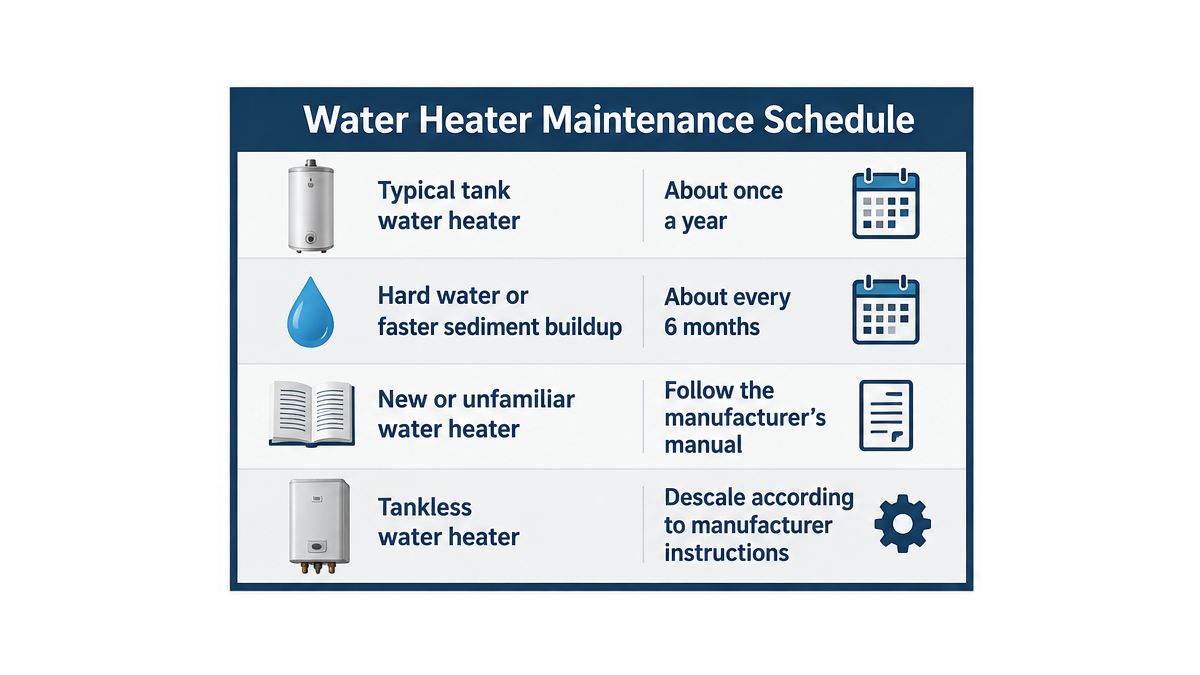
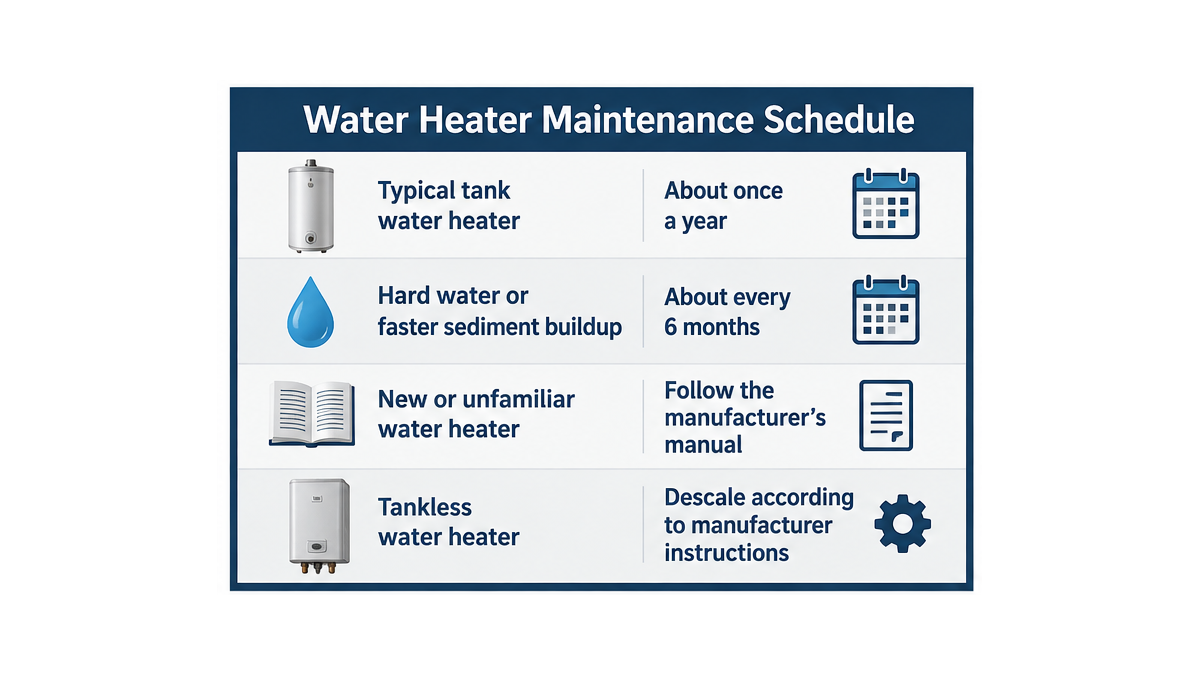
| Typical tank water heater | About once a year |
| Hard water or faster sediment buildup | About every 6 months |
| New or unfamiliar water heater | Follow the manufacturer’s manual |
| Tankless water heater | Descale according to manufacturer instructions |
If you are still asking how often should i drain my water heater because you do not know whether your water is hard, your local water information can help. Municipal customers can review the EPA’s guidance on annual Consumer Confidence Reports and check the report supplied by their local water utility.
Practical Tip: Your calendar is only a starting point. If sediment is appearing well before the annual flush, adjust the maintenance schedule instead of waiting for the date to come around.
What Sediment Is Doing Inside The Tank
Water carries dissolved minerals and small amounts of debris into the heater. As water is repeatedly heated, some material can settle at the bottom of the storage tank.
A thin layer may cause little noticeable trouble. A heavier layer can interfere with heat transfer, reduce usable tank capacity, contribute to noise, and make the system work harder.
Gas water heaters may begin making popping or rumbling sounds as water trapped around deposits heats and moves. Electric units can develop buildup around heating elements. Either way, the problem is not simply “dirty water.” Sediment can affect how the heater performs.
The answer to how often should i drain my water heater therefore depends partly on what is actually accumulating inside your system, not just its age.
Signs You Should Not Wait For The Next Scheduled Flush
Do not automatically wait another six or twelve months if your water heater is already showing signs of trouble.
Watch for:
- Popping, cracking, or rumbling sounds during heating
- Less available hot water than you used to have
- Water taking noticeably longer to heat
- Sediment or particles coming from the drain valve
- Discoloration that appears mainly on the hot-water side
- A drain valve that barely flows when opened
Some of these symptoms can also indicate corrosion, a failing component, or another plumbing issue. Flushing is maintenance, not a cure for every water-heater problem.
If there is active leaking from the tank itself, visible corrosion around important fittings, electrical trouble, or a gas-related concern, stop treating the problem as routine maintenance and have the unit inspected.
Draining Versus Flushing: Why The Difference Matters
Simply attaching a hose and letting the tank empty may remove loose material, but heavier sediment can remain behind.
A full flush generally involves shutting the unit down correctly, allowing the water to reach a safe condition, draining the tank, then using the incoming water supply to move additional sediment toward the drain.
Always follow the instructions for your exact model. Gas and electric heaters have different shutdown and restart procedures, and restoring power to an electric heating element before the tank is completely full can damage the element.
The CDC also advises homeowners to flush water heaters regularly according to manufacturer recommendations, or have a professional perform the work.
Important: Water leaving a heater can be hot enough to cause serious burns. Direct the drain hose to a safe location and never treat the pressure-relief valve or hot discharge water casually.
When DIY Water Heater Flushing Stops Being A Good Idea
Routine maintenance on a familiar, properly functioning water heater can be manageable for some homeowners. The situation changes when the equipment is old, neglected, damaged, or difficult to shut down safely.
Professional service makes more sense when:
- You do not know when the heater was last maintained.
- The drain valve is blocked or badly corroded.
- The heater will not drain properly.
- You see leakage or significant rust.
- You are unsure how to shut off and restart the gas or electrical system.
- Sediment returns quickly after flushing.
- Hot-water performance remains poor after maintenance.
A proper service visit can also look beyond the sediment. The technician can evaluate the drain valve, temperature and pressure relief valve, anode rod, visible connections, leaks, and overall heater condition.
Local Water Heater Help From Trusted Plumbing & Heating
Trusted Plumbing & Heating provides residential and commercial water-heater service throughout the Greater Seattle and Puget Sound area. Its water heater services include inspection, repair, replacement, installation, upgrades, and help with sediment-related performance problems.
Owner and founder Jim Cunningham brings more than 40 years of plumbing industry experience. The company is family-owned and operated, and its technicians work with traditional storage water heaters as well as tankless, heat pump, and other modern systems. For a homeowner who is unsure whether a noisy or poorly performing heater simply needs maintenance or is approaching replacement, that experience can help separate a routine service issue from a larger problem.
Why Choose Trusted Plumbing & Heating?
- More than 40 years of plumbing industry experience
- Washington plumbing contractor license TRUSTPH781NC
- Construction contractor license TRUSTPH840KO
- Licensed, insured, and bonded technicians
- Same-day availability for many service calls
- Service throughout King and Pierce Counties, including Renton, West Seattle, Kent, Tacoma, and surrounding communities
Keep Your Hot Water System On Schedule
A yearly flush is a sensible maintenance target for many tank water heaters, but your water quality and equipment may call for more frequent attention. Pay attention to what the heater is telling you rather than relying on the calendar alone.
Trusted Plumbing & Heating serves Renton, Seattle, Bellevue, Kent, Auburn, Federal Way, Tacoma, West Seattle, and surrounding communities across the Greater Puget Sound region. If your heater is noisy, slow, full of sediment, or overdue for professional attention, get in touch to schedule service.
Frequently Asked Questions
How Often Should I Drain My Water Heater If I Have Hard Water?
About every six months may be appropriate for a tank water heater in hard-water conditions. Check your manufacturer’s instructions and adjust the schedule based on actual sediment buildup.
Is Draining A Water Heater The Same As Flushing It?
No. Draining empties the tank, while flushing uses additional fresh water to help move sediment out after the tank has begun draining.
Should I Flush A Tankless Water Heater?
Yes, tankless systems still need mineral maintenance, but the process is usually called descaling and follows a different procedure than flushing a storage tank.
Can Sediment Damage A Water Heater?
Heavy sediment can reduce heat transfer, contribute to noise, reduce usable hot-water capacity, and place additional strain on heating components.
Should I Flush An Old Water Heater That Has Never Been Flushed?
Have an older, neglected unit inspected first if you are concerned about corrosion, a clogged drain valve, leaks, or safe shutdown. Forcing maintenance on deteriorated equipment can create additional problems.
Why Is My Water Heater Still Making Noise After Flushing?
Persistent noise can mean sediment remains inside, but it may also point to heating-element, burner, pressure, or other mechanical issues that need inspection.