
If you are researching how to install a tankless water heater, the first thing to understand is that this is not a simple swap for your old storage tank. A tankless unit heats water as you use it, but getting reliable hot water depends on correct sizing, plumbing connections, fuel supply, venting, and electrical requirements.
Whether you are replacing an aging tank or upgrading your home’s heating system, understanding the installation process helps you avoid expensive mistakes. Here is what happens during a proper installation, what you should check beforehand, and when professional help is necessary.
What You Should Know Before Getting Started
Here are six important things to consider:
- Tankless heaters provide continuous hot water within their rated flow capacity, not unlimited flow.
- Gas models may require a larger fuel supply and dedicated exhaust venting.
- Electric models may need significant electrical panel or circuit upgrades.
- Your household’s simultaneous hot water demand determines the right unit size.
- Plumbing, gas, and electrical permits may be required before installation.
- Professional testing is essential to confirm safe operation and consistent temperatures.
Choose the Right Water Heater for Your Home
Before choosing a unit, calculate how much hot water your household uses simultaneously. Unlike traditional tank heaters, tankless systems are sized using gallons per minute (GPM) and the temperature rise required.
For example, if incoming water is 45°F and your desired outlet temperature is 120°F, the heater must raise the temperature by 75°F.
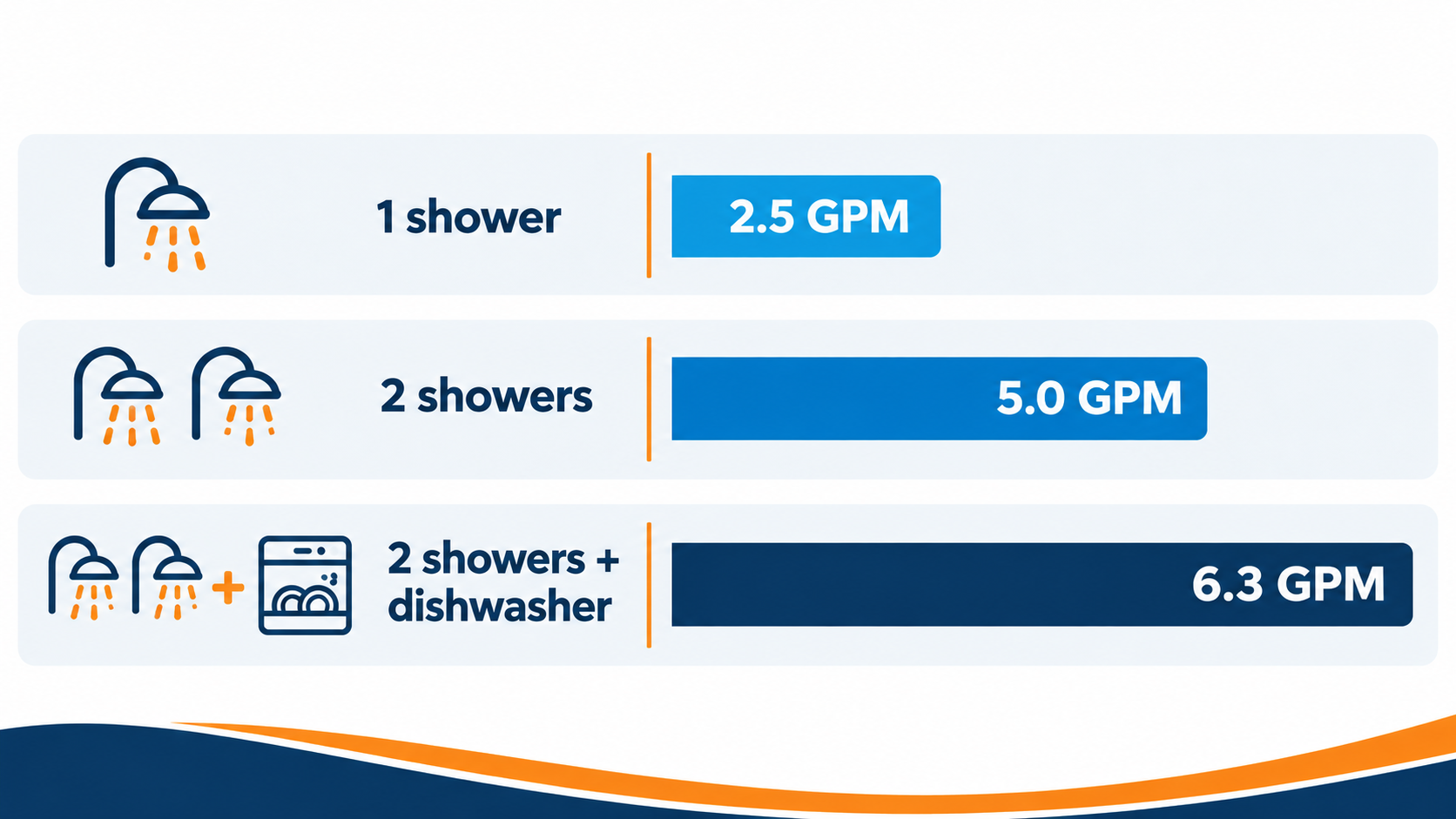
The following examples use approximate fixture flow rates from ENERGY STAR’s tankless water heater guidance.
| Simultaneous Use | Approximate Combined Flow |
|---|---|
| One shower | 2.5 GPM |
| Two showers | 5.0 GPM |
| Two showers and dishwasher | 6.3 GPM |
These figures represent illustrative fixture flow, not necessarily the exact hot-water demand. Actual requirements depend on your fixtures and how much cold water is mixed in.
When learning how to install a tankless water heater, remember that a model advertised at a high GPM may deliver less at colder incoming temperatures. Check its performance chart at your required temperature rise.
Important: A tankless unit can provide continuous hot water, but only up to its rated flow capacity. Running too many fixtures simultaneously can reduce performance.
How the Installation Process Works
A professional installation generally follows five stages. The specific equipment, connections, and methods depend on the heater model and local building requirements.
1. Inspect the Existing System and Installation Location
The installer checks available wall space, mounting support, access for future service, water pressure, and nearby utility connections.
For gas equipment, the inspection also covers combustion air, exhaust routing, and fuel supply capacity. Condensing models may need an approved condensate drain and neutralizer.
2. Shut Off Utilities and Remove the Old Tank Unit
Before removing an existing heater, the installer isolates its electrical or gas supply, shuts off the appropriate water valves, and drains the storage tank safely.
The old equipment is disconnected and removed. Replacing a tank heater may require relocating pipes because tankless equipment has different connection points and mounting requirements.
3. Mount the Heater and Connect Water Lines
The new unit is secured using manufacturer-approved mounting hardware.
The plumber then connects water supply and outlet pipes, installs appropriate isolation and service valves, and provides required pressure-relief protection.
Service valves are particularly useful because they allow future descaling without disconnecting the equipment.
4. Complete Gas, Electrical, and Venting Connections
Gas installations require properly sized fuel piping, approved fittings, leak testing, and model-specific exhaust arrangements. A qualified professional must confirm that available pressure and capacity meet the appliance requirements.
Electric tankless heaters may require dedicated high-amperage circuits. A licensed electrical professional should evaluate panel capacity and complete any necessary upgrades.
The U.S. Department of Energy’s tankless installation guidance emphasizes correct sizing, combustion arrangements, and protection against cold-weather vent problems.
5. Start, Test, and Adjust the System
After installation, the technician purges air from the water lines, checks connections, confirms safe operation, and measures delivered water temperature.
The heater is configured according to the manufacturer’s instructions. Around 120°F is a common residential delivery target, although household needs and scald protection requirements may differ.
Do You Need Permits for Heater Installation in Washington?
Yes, plumbing and related utility work commonly requires permits, although the exact requirements depend on your location and project.
As of July 1, 2026, Public Health – Seattle & King County requires permits for replacement water heaters within its jurisdiction. Its updated permit guidance also explains when separate fuel-gas, mechanical, or electrical permits are necessary.
The agency administers plumbing permits in Seattle, Clyde Hill, and unincorporated King County. Other cities, including Renton and Tacoma, have their own applicable permitting arrangements.
Improperly installed fuel-burning appliances can also create carbon monoxide hazards. The Environmental Protection Agency’s carbon monoxide safety guidance recommends professional installation and appropriate carbon monoxide alarms.
Safety Warning: Never assume an existing gas exhaust pipe can be reused with a new tankless model. Vent materials, clearances, and termination locations must meet the specific manufacturer’s requirements.
What Makes Tankless Installation More Expensive?
A practical answer to how to install a tankless water heater must also consider the work beyond mounting the appliance.
Installation cost depends on several factors, including:
- Upgrading an undersized gas line or electrical service.
- Adding dedicated vent pipes or condensate drainage.
- Relocating plumbing connections.
- Installing isolation valves and approved accessories.
- Obtaining permits and completing required inspections.
A straightforward replacement may be completed in one working day, while converting an older storage-tank setup can take longer.
Tankless heaters can reduce standby energy losses because they heat water on demand. However, lower operating costs do not automatically mean a short financial payback period. Fuel prices, household usage, equipment efficiency, and installation expenses all matter.
What Should You Check After Installation?
Once the system is operating, test hot water at several fixtures, including the shower, kitchen sink, and bathroom faucet.
Here’s how to check basic performance: run hot water at one fixture, note its temperature and consistency, then operate another fixture to see whether the system maintains satisfactory delivery.
Watch for unusual temperature fluctuations, error codes, leaks, or unexpected shutdowns.
A tankless heater also requires ongoing maintenance. Mineral accumulation can restrict flow and reduce heating performance. Descaling intervals should follow the manufacturer’s recommendations and local water conditions.
Reliable Tankless Installation Support in the Greater Seattle Area
At Trusted Plumbing & Heating LLC, we help homeowners evaluate their existing hot water systems, select suitable replacement equipment, and complete professional installations. Our team handles water heater inspections, repairs, replacements, and upgrades across the Greater Seattle area.
Converting from a storage tank often involves more than choosing a smaller appliance. Our plumbers assess your household’s needs, existing connections, and installation conditions before recommending a practical solution. We focus on clear communication, safe workmanship, and helping customers understand their options before work begins.
Why Choose Trusted Plumbing & Heating?
- Over 40 years of plumbing industry experience through owner and founder Jim Cunningham.
- Licensed Washington plumbing contractor, TRUSTPH781NC.
- Washington construction contractor registration, TRUSTPH840KO.
- Family-owned and operated, with licensed, insured, and bonded professionals.
- Experience with residential water heater installation, replacement, maintenance, and repair.
- Same-day service advertised for eligible calls, with positive customer testimonials highlighting responsiveness and fair pricing.
Get Professional Help With Your Tankless Upgrade
If you are deciding how to install a tankless water heater in your home, start with a professional assessment rather than buying equipment based on advertised capacity alone.
Trusted Plumbing & Heating serves Renton, Seattle, West Seattle, Bellevue, Kent, Auburn, Federal Way, Tacoma, and surrounding communities across King and Pierce Counties, with additional service areas listed throughout the Puget Sound region.
Whether you are replacing a failing heater or considering an energy-efficient upgrade, contact our team to discuss your installation and request an estimate.
Frequently Asked Questions
Can I Install a Tankless Water Heater Myself?
Homeowner installations may be legally permitted in certain jurisdictions, but professional installation is strongly recommended. Gas, electrical, venting, and code requirements make the project more complex than ordinary fixture replacement.
Will Hot Water Reach My Faucet Immediately?
No, a tankless heater does not eliminate the time needed for heated water to travel through household pipes. A compatible recirculation arrangement may reduce waiting time.
Will a Gas Tankless Heater Work During a Power Outage?
Most modern gas tankless heaters require electricity for their controls, ignition, and ventilation fans. They generally stop operating during an outage unless compatible backup power is provided.
How Often Should a Tankless Heater Be Descaled?
Many manufacturers recommend annual maintenance, but the correct interval depends on your water hardness, usage, and model instructions. Heavy mineral buildup may require more frequent attention.
Can a Tankless Water Heater Be Installed Outdoors in Washington?
Yes, certain models are approved for outdoor installation, but freeze exposure and manufacturer requirements must be considered. Outdoor units need suitable cold-weather protection and an approved installation location.