
If you are searching for how to remove pop up drain stopper without damaging the sink, first identify what is actually holding it in place. A traditional bathroom sink pop-up is usually connected to a horizontal pivot rod under the basin, so pulling harder from above can damage the linkage.
Before You Reach Under The Sink
- Check whether the stopper is controlled by a lift rod behind the faucet or by pushing and twisting the stopper itself.
- Clear the cabinet and place a towel under the drain.
- Photograph the linkage before disconnecting it.
- Do not remove the P-trap just to free a traditional pop-up stopper. Usually, only the pivot rod needs to come out.
- If chemical drain cleaner is already in the sink, do not open drain connections until you know it is safe to handle.
First, Know Which Stopper You Have
Not every “pop-up” drain uses the same mechanism.
| Stopper Type | What You Will Notice | Usual Removal Route |
|---|---|---|
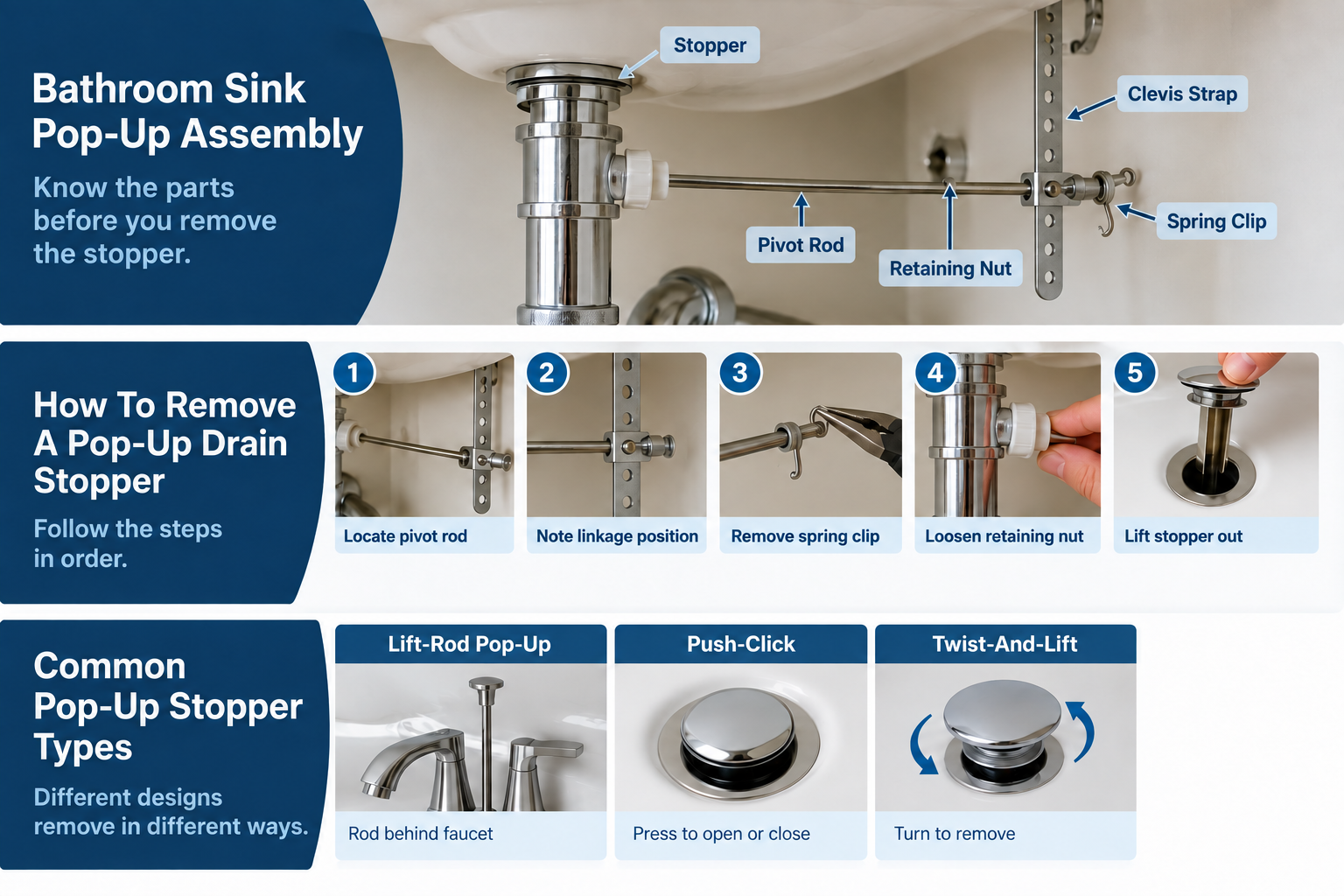
| Lift-Rod Pop-Up | Rod behind faucet | Disconnect pivot rod below sink |
| Push-Click | Press to open or close | Unscrew cap or stopper body |
| Twist-And-Lift | Turns by hand | Twist counterclockwise, then lift |
If you have a lift rod behind the faucet, use the method below. With no linkage under the sink, do not force the stopper upward. Many push-click styles thread into a center post.
How To Remove A Traditional Pop-Up Drain Stopper
A standard lift-rod assembly has a clevis strap, spring clip, horizontal pivot rod, and retaining nut.
1. Find The Pivot Rod
Look behind the sink drain for a thin horizontal rod entering the drain pipe through a small round nut. That rod catches the bottom of the stopper.
You usually do not need to shut off the faucet supply valves, but do not run water while the pivot rod is removed.
2. Mark The Linkage Position
Note which hole in the clevis strap the rod uses. A photo or pencil mark prevents guesswork because another hole can change how far the stopper opens or closes.
3. Remove The Spring Clip
Pinch the spring clip and slide the pivot rod out of the clevis strap. Keep the clip safe.
4. Loosen The Retaining Nut
Turn the pivot-rod nut counterclockwise by hand. If needed, use pliers gently. Do not crush a plastic nut or wrench aggressively on old, corroded metal.
Pull the pivot rod straight back. Keep track of the ball seal or gasket around it.
5. Lift The Stopper Out
Pull the stopper straight up from the sink. If it resists, wiggle it slightly rather than prying against porcelain or stone.
This is the key step in how to remove pop up drain stopper assemblies connected to a faucet lift rod. Once the rod is out, the stopper should lift free.
Practical Tip: King County’s plumbing-code reference lists 1 1/4 inches as the minimum trap and trap-arm size for a lavatory, so a relatively small wad of hair can noticeably restrict flow.
Clean The Stopper Before You Put It Back
Hair, soap residue, and mineral buildup commonly collect around the lower stem and pivot opening.
Remove debris with gloves, then scrub the stopper with warm water and a mild cleaner. If you are also treating a slow drain, King County’s safer household-product guidance includes a method using 1/2 cup baking soda followed by 1/2 cup white vinegar.
Never combine that approach with a commercial drain cleaner already in the pipe.
For homes on septic systems, the U.S. Environmental Protection Agency advises avoiding chemical drain openers for clogged drains and recommends mechanical methods such as a drain snake instead.
Reinstall It So The Stopper Actually Works
Learning how to remove pop up drain stopper hardware is only half the job. Reassembly is where many DIY repairs go wrong.
Drop the stopper back in with its bottom opening facing the rear. Slide the pivot rod through the retaining nut and into the stopper opening, then reconnect the same clevis hole.
Tighten the retaining nut enough to seal around the pivot ball without restricting movement. Test the lift rod, run water, and check for drips.
If the stopper will not hold water, adjust the clevis slightly. If water leaks at the pivot nut, reseat the ball or gasket instead of simply tightening harder.
Warning: If a caustic drain opener may still be sitting in the trap, avoid opening the P-trap or other drain joints. A trapped chemical splash is a bigger problem than a slow sink.
What If The Stopper Still Will Not Come Out?
A stuck stopper usually means the pivot rod is engaged, buildup has seized the stem, or the stopper is a different design.
Before using more force:
- Confirm the pivot rod is fully withdrawn.
- Look for a center screw or threaded cap on push-click designs.
- Wiggle a traditional stopper gently while lifting.
- Stop if the drain flange itself starts turning because that can disturb the seal.
- If the stopper comes out but the sink remains slow, the clog may be in the trap or farther down the line.
When A Simple Stopper Job Turns Into A Drain Problem
If you follow the steps for how to remove pop up drain stopper and find heavy corrosion, a broken pivot rod, a leaking drain body, or a deeper clog, professional service can prevent a small repair from becoming a leak.
Trusted Plumbing & Heating works on blocked sinks, drain cleaning, fixture problems, pipe repairs, and larger drain issues across King and Pierce Counties. The company is locally owned and family-operated, and its website states more than 40 years of industry experience.
Washington homeowners can also review King County guidance on hiring a registered plumbing contractor.
Why Choose Trusted Plumbing & Heating?
- More than 40 years of industry experience
- Washington construction contractor license CC TRUSTPH840KO and plumbing contractor license PC TRUSTPH781NC listed on the company website
- Licensed, insured, and bonded plumbing professionals
- Same-day availability for many plumbing service calls
- Residential and commercial drain and fixture experience
- Customer reviews on the site that mention on-time arrivals, same-day response, and a drain leak identified and repaired within an hour
Need Help With A Sink That Still Will Not Drain?
Trusted Plumbing & Heating serves Renton, West Seattle, Kent, Tacoma, and surrounding King and Pierce County communities. If the stopper is broken, leaking, or hiding a deeper clog, get in touch to schedule professional plumbing service.
Frequently Asked Questions
Can I Remove A Pop-Up Stopper Without Going Under The Sink?
Only some designs can be removed entirely from above. A traditional lift-rod pop-up normally requires disconnecting the horizontal pivot rod under the sink first.
Why Does My Sink Stopper Spin But Not Unscrew?
It may not be threaded. If the stopper is attached to a pivot rod, spinning the top will not release it until the rod is disconnected underneath.
Can I Leave The Sink Stopper Out Permanently?
You can leave it out temporarily, but the open drain can let jewelry, caps, hair, and other debris enter the pipe more easily. Repairing or replacing the stopper is the better long-term solution.
Why Is The Pivot-Rod Nut Leaking After I Reinstalled The Stopper?
The pivot ball or gasket may be misaligned, damaged, or tightened incorrectly. Reseat the parts first, then tighten only enough to stop the leak while keeping the rod free to move.
Does Removing The Stopper Always Fix A Slow Bathroom Sink?
No. Removing the stopper only clears debris near the opening. If drainage stays slow afterward, the blockage may be in the P-trap, branch drain, or farther down the line.