Many people never stop to think about their water heater until something goes wrong. But a serious question often comes up: can a water heater explode? While rare, the possibility exists when safety components fail or maintenance is ignored. Understanding the risks early can prevent dangerous situations and protect your home.
At Trusted Plumbing and Heating, we believe heater safety starts with awareness. A properly maintained system is unlikely to fail, but neglected water heaters can develop pressure issues, faulty valves, and other conditions that increase risk. That is why recognizing warning signs, understanding pressure relief systems, and knowing when to act is so important.
In this guide, we will break down how a water heater works, what causes failures, and how homeowners can prevent the risk of a water heater explosion before it ever begins.
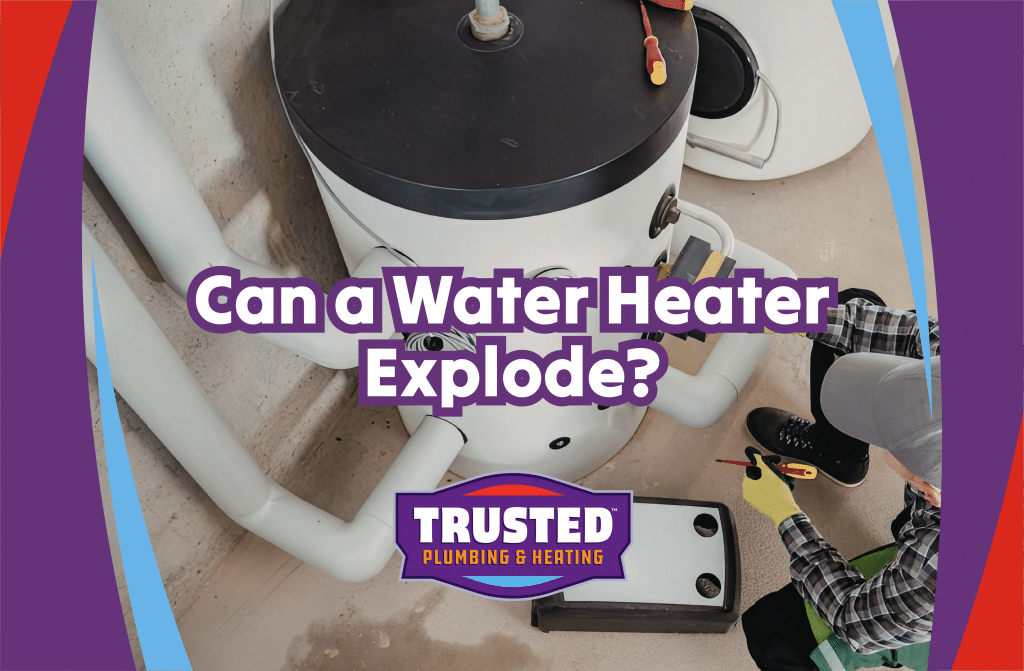
Can a water heater explode? Understanding the real risk
The question of whether a water heater can explode is more common than many homeowners realize. While modern systems are designed with safety controls, the answer is yes. Under extreme conditions, a water heater can fail violently if the pressure inside the tank becomes uncontrollable.
A typical heater is designed to store hot water at a regulated pressure. However, if the system is ignored or damaged, internal pressure can build up beyond safe limits. This is where Trusted Plumbing and Heating stresses regular inspection and preventive care.
When water heaters can explode, it is usually not sudden. Instead, it is the result of ongoing issues that were not addressed in time, leading to a critical failure.
Water heater basics and how pressure builds
To understand safety risks, it is important to know how a water heater functions. Cold water enters the tank, gets heated, and expands. This expansion naturally increases pressure inside the tank.
Under normal conditions, the system controls this pressure using a pressure relief valve. However, when this system malfunctions, water heaters can become dangerous.
Trusted Plumbing and Heating often explains that most heater safety issues begin when homeowners overlook early signs of stress in the system.
Common pressure-related causes include:
- Sediment buildup inside the tank
- Faulty or blocked valve systems
- Overheating due to thermostat failure
- Lack of regular plumbing maintenance
- Excessively high incoming water pressure
When these issues combine, the risk of a heater explosion increases significantly.
Warning signs your water heater may be in danger
Recognizing warning signs early is key to preventing a water heater explosion. Most systems show symptoms before failure, but homeowners often ignore them until it is too late.
Trusted Plumbing and Heating advises paying attention to unusual changes in performance, sound, or leakage.
Some important warning signs include:
- Rumbling or banging noises from the water heater
- Rust-colored or cloudy water
- Leaking around the base of the tank
- Frequent resetting of the system
- Sudden drops or spikes in hot water supply
If any of these occur, it may indicate rising pressure or internal damage. Addressing these early helps prevent heater explosions and costly repairs.
The importance of the relief valve and pressure relief system
The relief valve, also known as the pressure relief valve, is one of the most important safety components in any water heater. Its job is to release excess pressure when it becomes too high.
When functioning correctly, this valve prevents exploding risks by controlling internal conditions inside the tank. However, if it becomes blocked or fails, the system loses a critical safety mechanism.
Trusted Plumbing and Heating regularly inspects these valves because even a small malfunction can lead to serious heater safety issues.
A properly working valve ensures:
- Safe release of excess pressure inside the system
- Prevention of overheating conditions
- Reduced risk of heater explosion events
- Stable operation of water heaters under daily use
Without this protection, the risk of a water heater explosion increases dramatically.
Heater safety maintenance every homeowner should follow
Routine maintenance is the most effective way to prevent heater explosions. A neglected water heater can slowly develop issues that lead to failure over time.
Trusted Plumbing and Heating recommends consistent inspections to ensure long-term reliability and safety.
Key maintenance steps include:
- Flushing the tank to remove sediment buildup
- Testing the pressure relief valve regularly
- Checking for leaks in plumbing connections
- Monitoring temperature settings
- Inspecting for corrosion or rust on the heater
These simple steps help maintain proper heater safety and reduce the risk of dangerous situations developing unexpectedly.
How dangerous situations develop in water heaters
A water heater becomes dangerous when small problems are ignored. Over time, sediment buildup, faulty valves, or overheating can create rising pressure inside the system.
When this pressure is not controlled, it can lead to explosive conditions. Although rare, a full heater explosion can cause serious damage to property and safety risks to occupants.
Trusted Plumbing and Heating emphasizes that most failures are preventable with timely service and inspection.
Dangerous situations often include:
- Continuous overheating of water heaters
- Non-functioning relief valve systems
- Excessive pressure buildup in the tank
- Ignored warning signs over time
Early detection is the key to avoiding these risks.
Water heater safety for long-term home protection
Strong heater safety practices protect both your home and your family. A well-maintained water heater rarely reaches a point where it could explode, but prevention is always better than repair.
Trusted Plumbing and Heating encourages homeowners to treat their systems as essential home infrastructure, not just appliances.
Good safety habits include:
- Scheduling annual plumbing inspections
- Keeping temperature settings within a safe range
- Monitoring hot water performance changes
- Ensuring proper maintenance routines are followed
By focusing on prevention, homeowners can avoid most issues related to water heaters and reduce risk significantly.
Preventing heater explosion risks with professional care
Preventing a heater explosion is not complicated when professional care is involved. Licensed technicians can detect early signs of failure, test pressure-relief systems, and ensure that all components are functioning properly.
Trusted Plumbing and Heating plays a key role in helping homeowners stay ahead of risks by providing expert inspection and repair services.
With regular maintenance, the risk of a water heater explosion becomes extremely low. Proper servicing ensures the system operates safely, efficiently, and reliably throughout its lifespan.
Safety begins with awareness and action
So, can a water heater explode? Yes, but only under neglected or extreme conditions. With proper care, maintenance, and attention to warning signs, homeowners can avoid these risks entirely.
Trusted Plumbing and Heating remains committed to helping families maintain safe, efficient, and reliable water heaters through expert service and dependable plumbing support.
A safe home starts with a safe system, and every water heater deserves that level of attention.
Contact Us
Don’t wait for warning signs to turn into emergencies. With Trusted Plumbing and Heating, you get expert inspection, reliable maintenance, and peace of mind knowing your water heater safety is in trusted hands.